Nintendo Switch 2 Review: Performance, Games & Battery Life
826 views
The annoying part about buying a new console is rarely the console itself. It’s the nagging question behind the checkout button: am I actually getting a meaningful upgrade, or am I paying hundreds of dollars for sharper menus and a few launch games?
That question matters more with the Nintendo Switch 2.
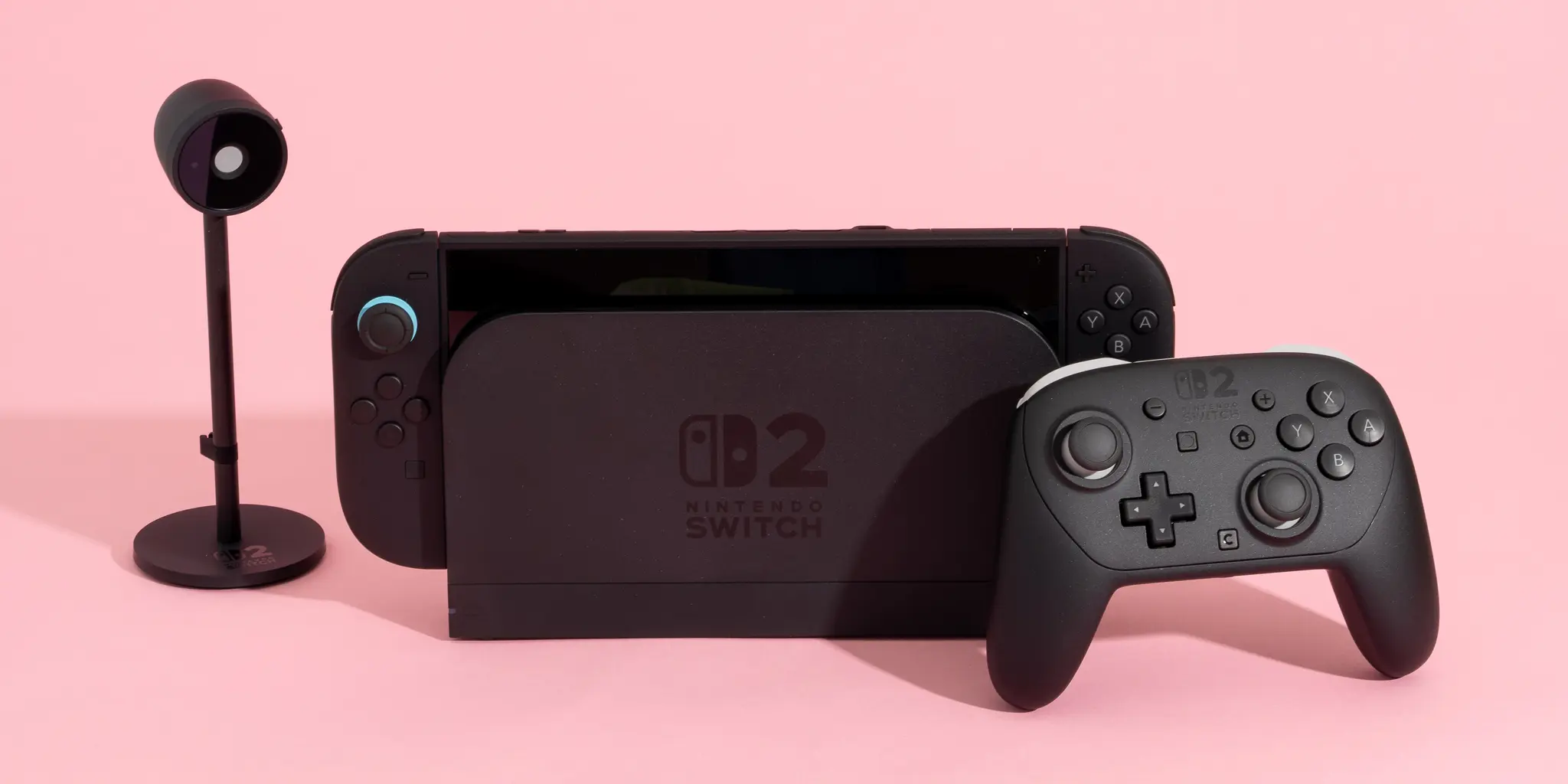
Nintendo’s new hybrid machine is faster, larger, and technically more capable than the original Switch. It also brings a 7.9-inch 1080p display, HDR10, variable refresh rate support up to 120Hz, 256GB of UFS storage, Wi-Fi 6, two USB-C ports, and a custom NVIDIA processor. The catch? Better hardware doesn’t automatically mean better value for every existing Switch owner.
After the early-generation excitement settles, the Nintendo Switch 2 looks less like a radical reinvention and more like something Nintendo arguably should have delivered years ago: a modernized Switch that can finally handle demanding games without feeling permanently one generation behind.
That’s a compliment. Mostly.
The big upgrade is performance
The original Switch had charm, but by the end of its life, performance compromises were impossible to ignore. Long load times. Soft image quality. Frame-rate dips during busy scenes. Third-party games that sometimes felt like technical experiments rather than polished releases.
Switch 2 changes the baseline.
Nintendo officially describes the system as using a custom NVIDIA processor, while the console supports a 1920×1080, 7.9-inch LCD with HDR10 and VRR up to 120Hz. In TV mode, the dock can output higher resolutions depending on the game and display setup.
The difference is easiest to appreciate in games that previously pushed the original hardware to its limits.
Load screens are shorter. Image quality is cleaner. Movement looks less compromised.
That doesn't mean every game suddenly runs at a locked 120fps, obviously. Game developers still decide how to use the available power. Some titles prioritize resolution. Others chase smoother frame rates. A visually ambitious game may also use different performance modes depending on whether the system is docked or running on battery.
Still, the important change is headroom.
Cyberpunk 2077: Ultimate Edition running on a Nintendo handheld would have sounded absurd during the early Switch era. On Switch 2, demanding third-party software is no longer automatically excluded from the conversation. The current library has also expanded beyond launch-window curiosities, with games such as Donkey Kong Bananza, Mario Kart World, enhanced Zelda releases, and major third-party titles demonstrating what the hardware can do.
That wider software potential might be the most significant upgrade of all.
The screen is better, but Nintendo made an interesting compromise
Nintendo chose LCD rather than OLED for the Switch 2's built-in display.
Some existing Switch OLED owners will immediately notice that.
The new panel is significantly larger at 7.9 inches and runs at 1920×1080, compared with the original Switch family's lower-resolution handheld displays. It also supports HDR10 and VRR up to 120Hz.
For fast-moving games, the higher refresh capability can make the handheld experience feel much more modern. Text and interface elements are sharper, too.
But OLED fans have a legitimate complaint.
Deep blacks still look better on OLED. Dark games benefit from it. Playing in a dim room can make the difference surprisingly obvious, especially if you're switching directly from a Switch OLED rather than an older base model.
So this isn't a universal screen upgrade in every visual category. It's a different set of strengths: more size, more resolution, HDR support, and higher refresh potential, traded against the OLED's superior contrast.
Storage is finally practical—until it isn't
The Nintendo Switch 2 includes 256GB of UFS internal storage, though some of that capacity is reserved for the operating system. That's a major improvement over the original Switch's 32GB and even the Switch OLED's 64GB.
At first, 256GB feels generous.
Then you start installing modern games.
The storage expansion situation is also more restrictive than many buyers expect. Switch 2 supports microSD Express cards up to 2TB, but standard microSD cards aren't suitable for storing playable Switch 2 software. Nintendo states that non-Express cards can only be used for transferring screenshots and videos from the original Switch. A system update is also required before microSD Express functionality can be used.
That's a small but expensive trap.
If you already own a perfectly good 512GB microSDXC card from your first Switch, don't assume you can simply move your new game library onto it. Check for the microSD Express standard before buying.
Simple as that.
The Joy-Con 2 mouse mode is clever, if a little awkward
Nintendo could have simply made bigger Joy-Cons and called it a day.
Instead, the Joy-Con 2 controllers include mouse sensors, allowing compatible games and software to use them against a flat surface much like a traditional computer mouse. Both controllers retain motion sensing through accelerometers and gyroscopes, while Nintendo also added HD Rumble 2.
The concept is genuinely useful in the right game.
Strategy titles, shooters, creative software, and games designed around pointer-style controls can benefit. Yet mouse mode also depends heavily on the surface you're using. A desk works. A smooth table works. Your couch cushion? Not so much.
That's classic Nintendo: inventive hardware with moments of brilliance and moments where you're wondering where, exactly, you're supposed to put the controller.
GameChat finally brings voice chat into the console
The C Button isn't decorative.
It opens Nintendo's GameChat features, allowing up to 12 friends to participate in a chat session. Up to four participants can use video chat with compatible USB cameras or share gameplay screens in real time. The console itself includes a built-in microphone, and Nintendo says the system automatically filters background noise and game audio while adapting microphone levels to different environments.
There is one important restriction now: GameChat requires a Nintendo Switch Online membership. Nintendo previously offered an open-access period from June 5, 2025, through March 31, 2026, but that period has ended.
The setup is straightforward enough:
Press the C Button or open the C Menu from the HOME screen.
Create or join a GameChat room, then invite approved friends.
GameShare adds another interesting wrinkle. Compatible software can be shared from a host system in supported sessions, although the exact player count and functionality vary by game. For internet-based GameShare through GameChat, both host and joining players need Switch 2 hardware. Original Switch systems can join locally hosted GameShare sessions under Nintendo's supported conditions.
It's a more coherent social system than Nintendo's old phone-app-dependent approach.
Finally.
Battery life: the weakest part of the upgrade
Here's the uncomfortable bit.
Nintendo rates the Switch 2 battery at approximately 2 to 6.5 hours, depending on the game and usage conditions. The internal lithium-ion battery is rated at 5,220mAh, or roughly 19.74Wh according to Nintendo's published battery specifications. Charging takes approximately three hours while the system is in Sleep mode.
That range is broad because the workload matters enormously.
A lighter game at moderate brightness is not the same battery test as a graphically intensive 3D title running at higher frame rates with Wi-Fi active and speakers turned up. The bigger display and more capable hardware consume more energy than the original Switch platform.
Nintendo's own power figures list average active TV-mode gaming consumption at 19W using Mario Kart World as the measurement basis, though handheld battery performance naturally involves different power constraints.
In practical terms, Switch 2 isn't the handheld I'd grab for an eight-hour flight without a USB-C power bank.
For commuting, shorter travel, hotel play, or an evening on the sofa? Fine.
For marathon handheld sessions, battery anxiety can return faster than expected.
The Joy-Con 2 battery is much less worrying
Each Joy-Con 2 has a 500mAh lithium-ion battery, with Nintendo estimating approximately 20 hours of use and roughly 3.5 hours for charging.
That's comfortably better suited to long multiplayer sessions than the console's own endurance.
The obvious annoyance is remembering which device actually needs charging.
I've found that's where people slip up: the console goes into the dock, everyone assumes the controllers are sorted, then someone detaches them for tabletop mode and discovers one controller was barely connected. A dedicated charging grip isn't essential, but for households that regularly play local multiplayer, it can remove that little ritual of checking battery icons before starting a game.
Backward compatibility makes upgrading less risky
One of the strongest reasons to consider Switch 2 is that your existing library doesn't suddenly become obsolete.
Nintendo confirms compatibility with many physical and digital Nintendo Switch games, although not every title or accessory works identically. Some games also receive free updates or paid upgrade packs that improve content or performance on Switch 2.
That changes the buying calculation.
You're not starting from zero.
A large existing Switch collection can come along, while selected games benefit from the new hardware. That gives the console a stronger day-one proposition than a completely isolated platform would have had.
Nintendo Switch 2 pricing is getting harder to ignore
Price is now a moving target.
Nintendo announced in May 2026 that the U.S. MSRP for the Switch 2 would increase from $449.99 to $499.99 on September 1, 2026. Canadian pricing rises from CAD $629.99 to CAD $679.99, while the My Nintendo Store price in Europe rises from €469.99 to €499.99. Nintendo cited changing market conditions and a broader long-term business outlook.
That makes timing relevant.
At $449.99, Switch 2 already required a careful value calculation. At $499.99, the competition from handheld PCs and other gaming hardware becomes harder to dismiss.
Still, raw specifications aren't Nintendo's only selling point. You buy this ecosystem for its hybrid convenience, first-party games, portability, local multiplayer, and the peculiar Nintendo ability to make hardware limitations disappear once you're genuinely enjoying a game.
Until the battery warning pops up.
Who should actually buy the Nintendo Switch 2?
Buy it now if:
Your original Switch is showing its age and performance limitations bother you.
You want access to newer Nintendo exclusives and more ambitious third-party ports.
You regularly switch between TV and handheld play.
Your existing Switch library makes backward compatibility especially valuable.
If you already own a Switch OLED and mostly play older or lightweight Nintendo games, waiting may be smarter. The OLED screen still has advantages, and the Switch 2's battery life isn't a dramatic step forward.
For everyone else, this is the Switch experience with many of the compromises sanded down.
Not all of them. Enough of them.
Nintendo Switch 2 FAQ
Is the Nintendo Switch 2 more powerful than the original Switch?
Yes. It uses a custom NVIDIA processor and supports a 1080p handheld display, HDR10, VRR up to 120Hz, and more advanced game performance than the original Switch hardware.
How long does the Nintendo Switch 2 battery last?
Nintendo estimates approximately 2 to 6.5 hours, depending on the game and usage conditions. The console has a 5,220mAh lithium-ion battery.
Can I use my old microSD card with Switch 2?
Not for storing playable Switch 2 games. The console requires microSD Express cards for expanded game storage, although standard microSD cards can be used for transferring original Switch screenshots and videos.
Does Nintendo Switch 2 play original Switch games?
Yes, many compatible physical and digital Nintendo Switch games work on Switch 2. Some titles also offer Switch 2-specific updates or paid upgrades. Compatibility is not universal, so check Nintendo's guidance for individual games and accessories.
Do I need Nintendo Switch Online for GameChat?
Yes. GameChat now requires an active Nintendo Switch Online membership after its open-access period ended on March 31, 2026.
The verdict
The Nintendo Switch 2 succeeds because Nintendo didn't abandon the idea that made the original console work. It simply gave that idea more room to breathe.
Games load faster. The display is sharper. Storage is less restrictive out of the box. Third-party support has more technical headroom. GameChat and GameShare finally make Nintendo's social features feel like part of the console rather than an awkward side project.
Battery life remains the compromise, and the move to microSD Express means upgrading storage can cost more than expected. The LCD also won't automatically impress Switch OLED owners.
Still, for players who have spent years tolerating fuzzy visuals and performance concessions because they wanted Nintendo games in a genuinely portable format, the Switch 2 feels like the correction.
If you're considering the upgrade, check your existing game compatibility, price out a microSD Express card before buying, and think honestly about how often you play handheld. That last detail may matter more than the spec sheet.
Nintendo Switch 2 review
Switch 2 battery life
Nintendo Switch 2 games
Nintendo Switch 2 performance
handheld gaming console
Found this helpful? Share it!